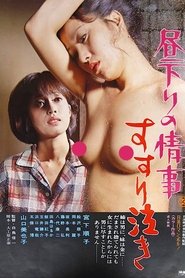
Japanese Torture (1978)
In the past, the only way to prove the true culprit of a crime was through physical evidence and the suspect's confession. For this reason, various torture methods were used to force confessions. However, the principle of confession was rejected in 1879, and torture was abolished. However, this is only on the surface, and torture by police and prosecutors continues to be used subtly to this day. This film is a shocking semi-documentary that exposes the reality of the numerous torture methods that stain history with gruesome blood. The story is divided into three parts and vividly depicts two cases of torture by those in power, one of a brutal lynching that covers the eyes of a husband with a lesbian wife, and another, each of which builds up abnormal sexual excitement amid the bloody scenes.
Director:
Banmei Takahashi
Writer:
Banmei Takahashi
 |
Naomi Oka as Fuji Ito |
 |
Shirō Shimomoto as Sakuzo, Fuji's husband |
 |
Yūichi Minato as Official |
 |
Shinobu Mori as Subordinate |
|
Kumiko Araki as Shinobu |
 |
Hajime Tanimoto as Shinobu's husband |
|
Mariko Kitazawa as Nami |
 |
Mayuko Hino as Hie |
|
Haruo Akiba as Jiro Shimoda |
 |
Masayoshi Nogami as Watanabe, police chief |
| Directing | Banmei Takahashi | Director |
| Writing | Banmei Takahashi | Screenplay |
| Production | Kōji Wakamatsu | Producer |
| Camera | Yuichi Nagata | Director of Photography |
| Lighting | Hajime Isogai | Lighting Director |
| Sound | Roman Kikaku | Music |
| Directing | Yoshiho Fukuoka | First Assistant Director |
| Directing | Yōichi Shiratori | Assistant Director |
| Camera | Makoto Mitsui | Assistant Camera |
| Lighting | Akira Nishiike | Lighting Technician |