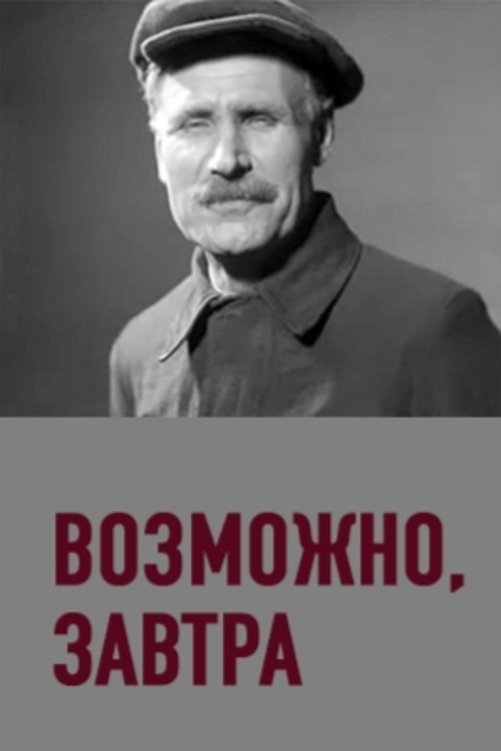
Maybe Tomorrow (1932)
The end of the 1920s. The capitalist world is in crisis. The fascists unleash war against the Soviet Union. The enemy attack interrupts the peaceful labor of Soviet people. Hundreds of production workers join the Red Army. At the front go Red Army units, columns of tanks, units of the people's militia. Enemy airplanes appear over the Soviet city, black bomb bursts are rising. The streets are moving mournful funeral processions of the first victims of the war. At the end of the movie, a worker appears on the screen, appealing to the audience to be ready for the war, which has not yet come, but will come “maybe tomorrow"
Directors: Dmitriy Dalskiy, Lyudmila Snezhinskaya.
 |
Peter Golm as Johann Shultz |
|
Albert Venohr as Harry Smith |
 |
Sofiia Smyrnova as German worker's wife |
|
Maria Sidorova as Natalya |
 |
Stepan Shkurat as Kolkhoz worker |
 |
Vladimir Voyshvillo as Party official (uncredited) |
 |
Semyon Grabin as Factory worker (uncredited) |
|
Borys Karlash-Verbytskyi as (uncredited) |
 |
A. Kerner as Factory owner (uncredited) |
 |
Vasyl Krasenko as Egoist (uncredited) |
|
Arseni Kuts as Factory worker (uncredited) |
|
Pavlo Petryk as Factory worker (uncredited) |
|
Aleksandr Suprun as Speaker (uncredited) |
| Sound | M. Pravdolyubov | Sound Director |
| Sound | O. Zolotnitskiy | Sound Director |
| Camera | Vladimir Okulich | Director of Photography |
| Art | Semyon Mandel | Production Design |
| Sound | I. Kishko | Original Music Composer |
| Writing | Mykola Bazhan | Script Editor |
| Directing | Dmitriy Dalskiy | Director |
| Directing | Lyudmila Snezhinskaya | Director |
| Writing | Dmitriy Dalskiy | Writer |
| Writing | Lyudmila Snezhinskaya | Writer |