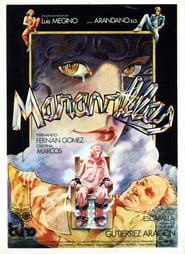
Maravillas (1981)
A young Catholic girl takes viewers through a changing Spanish political and social landscape as she develops from her confirmation day to adulthood. Her first experience with the real Spain comes when her Jewish godfathers cannot come to her confirmation. One of the godfathers, using a ring, poses an early challenge to her innocence that puts her in danger. He later returns, indirectly introducing her to a new boyfriend. If he is one of the symbols for Jewish life under Franco, or for a Judeo-Christian interaction, that interaction is complex. The young woman encounters different lovers as she grows into adulthood, but at the same time she is burdened with financially supporting her father and his own rather decadent lifestyle. Again, this difference in generations could be understood as a difference between the "new" and "old" Spain; it is up to the viewers to interpret the story elements as they decide.
Director: Manuel Gutiérrez Aragón
 |
Fernando Fernán Gómez as Fernando |
 |
Cristina Marcos as Maravillas |
 |
Enrique San Francisco as Membrillo |
 |
José Luis Fernández 'Pirri' as Pirri |
 |
Francisco Merino as Salomón |
 |
León Klimovsky as Santos |
 |
Eduardo MacGregor as Simón |
 |
Gérard Tichy as Benito |
 |
George Rigaud as Tomás |
 |
Miguel Molina as Miqui |
 |
José Manuel Cervino as Juez |
 |
Paco Catalá as |
 |
Juan Jesús Valverde as |
 |
Ofelia Angélica as |
 |
Emilio Rodríguez as |
 |
José Luis Barceló as |
| Directing | Manuel Gutiérrez Aragón | Director |
| Directing | Josetxo San Mateo | Assistant Director |
| Production | Luis Megino | Producer |
| Editing | José Salcedo | Editor |
| Writing | Manuel Gutiérrez Aragón | Writer |
| Crew | Teo Escamilla | Cinematography |
| Writing | Luis Megino | Writer |