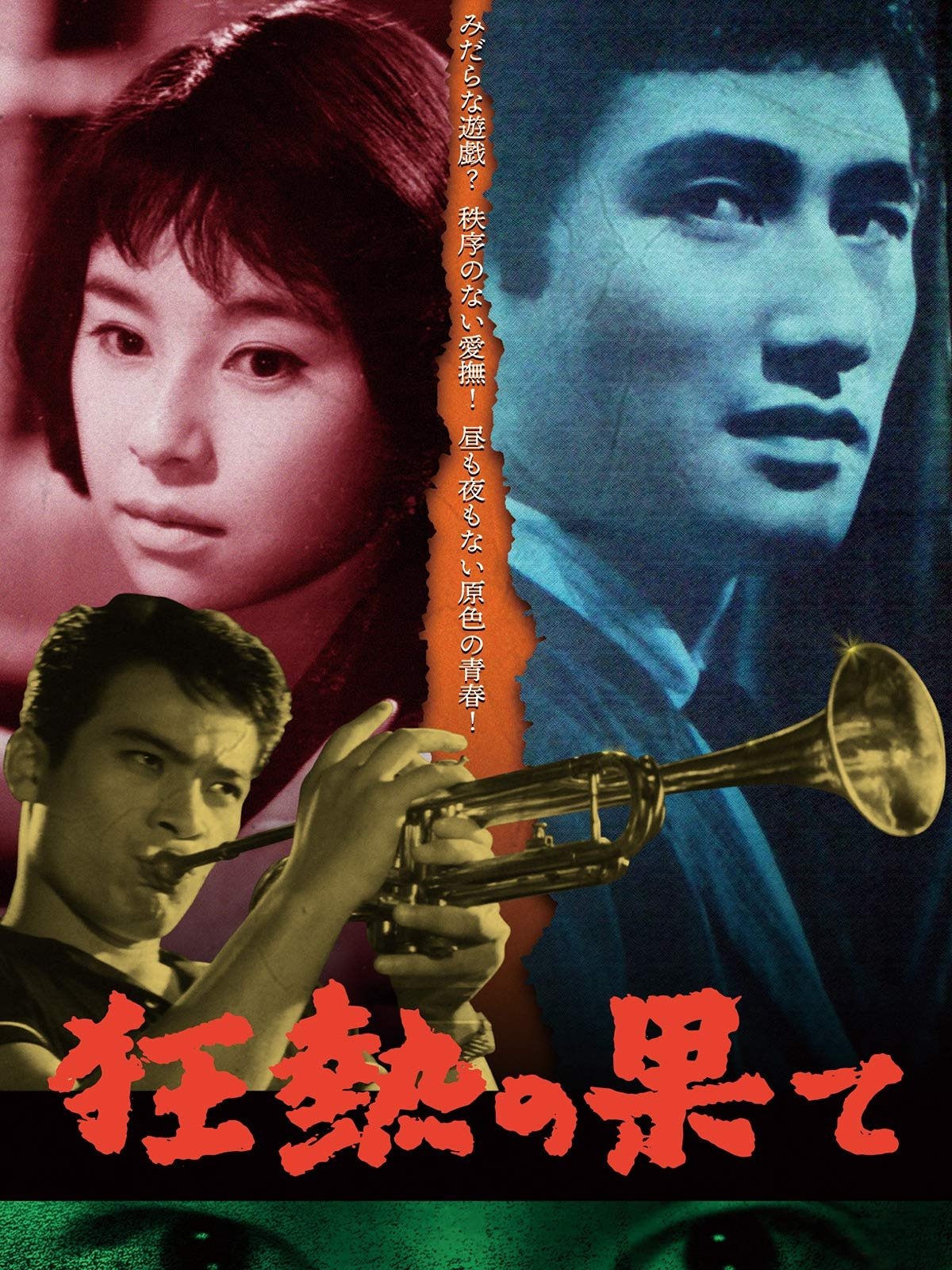
The End of Love (1961)
A leading postwar Japanese film critic and theorist who co-founded the seminal film magazine Eiga Hihyo (Film Criticism) in 1957, Eizo Yamagiwa made his directorial debut with this independent feature—long thought lost until a negative was recently discovered—about a group of idle bourgeois students known as the “Roppongi Tribe” (Roppongi zoku). Depicting the resignation and nihilism of the postwar generation in the years following the Anpo Treaty conflicts through a coming-of-age narrative, Yamagiwa offers sharp criticism of the prevalent characterizations of Japan's new youth offered by Nikkatsu's taiyozoku (“Sun Tribe”) films and the New Wave at large.
Director: Eizō Yamagiwa
 |
Kōji Matsubara as Kenji Nomura |
 |
Mitsuko Sawamura as Yuri |
 |
Terumi Hoshi as Michi Makino |
 |
Takashi Fujiki as Yoji Nakaoka |
 |
Yūko Kashiwagi as Akemi |
|
Namiji Namiura as Noriko |
 |
Harue Tone as Michi's mother |
 |
Fumiko Miyata as Nurse |
|
Masami Akimoto as Akiko |
|
Akira Nakamura as Michi's father |
|
Yoji Naruto as |
|
Hiroshi Inoue as Singer |
|
Akemi Nara as Makiko Kawamura |
 |
Yūji Hori as |
| Directing | Eizō Yamagiwa | Director |
| Writing | Masami Akimoto | Original Story |
| Production | Akira Sagawa | Executive Producer |
| Sound | Hikaru Hayashi | Original Music Composer |
| Camera | Kiminao Okada | Director of Photography |