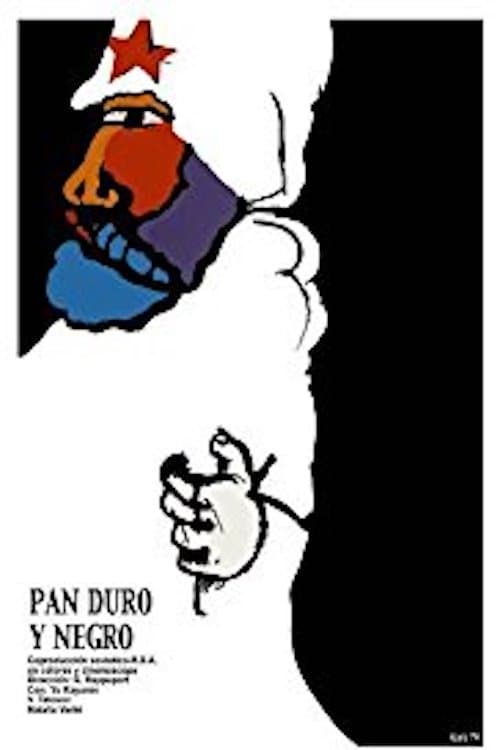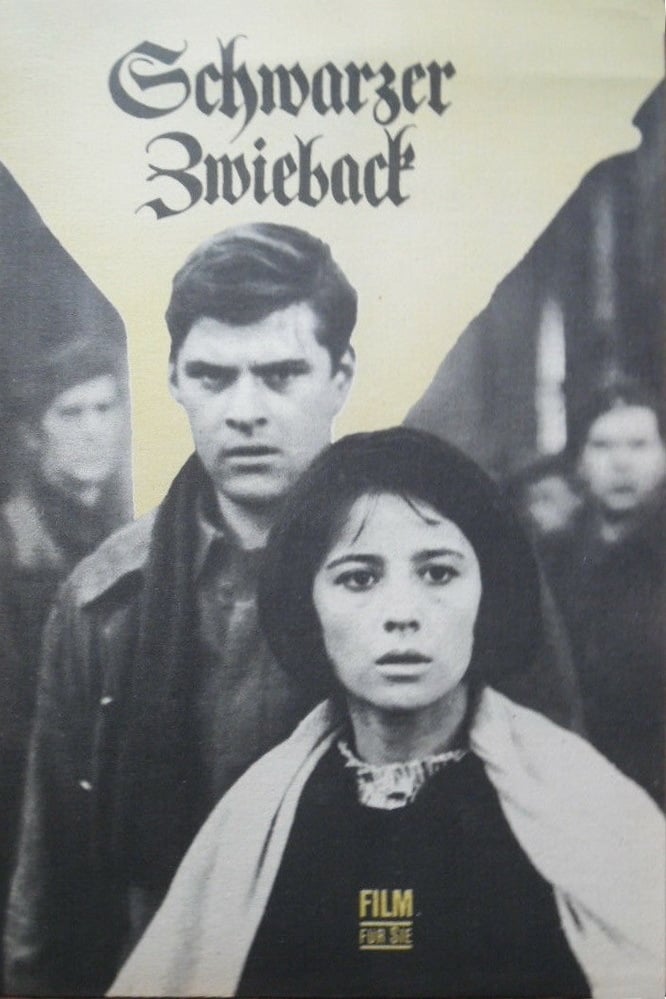
Black Rusks (1972)
The November Revolution of 1918 in Germany, famine and social upheaval evoke a response from the young Soviet government in Russia. To provide food assistance, trains with bread are being formed. One of them, on the personal instructions of V.I. Lenin is accompanied by the young revolutionary Tatyana . On the way, she meets a former German prisoner of war, Kurt . A romantic relationship arises between them. The train with bread, despite all the difficulties, was delivered. In a clash with a detachment of counter-revolutionary German troops, Tatyana was wounded. She returns to Moscow, and Kurt goes to Berlin to continue the revolutionary struggle.
Director: Herbert Rappaport
 |
Natalya Varley as Tanja |
 |
Rüdiger Joswig as Kurt |
 |
Nikolai Merzlikin as Woronin |
 |
Harry Hindemith as Neubert |
 |
Rolf Herricht as Rüschi |
 |
Günter Schubert as Grassmann |
 |
Yuriy Kayurov as |
 |
Vladimir Tatosov as |
 |
Viktor Uralsky as |
 |
Jessy Rameik as |
|
Harald Hauser as |
 |
Fred Delmare as |
 |
Artyom Karapetyan as |
|
Willi Neuenhahn as |
|
Gerd Michael Henneberg as |
 |
Vladimir Antonik as |
|
Johannes Knittel as Martin |
 |
Aleksandr Lazarev as |
 |
Klaus Manchen as |
 |
Yuri Medvedev as |
 |
Bruno O'Ya as |
 |
Hans-Dieter Schlegel as |
| Directing | Herbert Rappaport | Director |
| Writing | Edith Gorrish | Writer |
| Writing | Mikhail Bleiman | Writer |
| Camera | Rolf Schrade | Director of Photography |
| Camera | Eduard Rozovsky | Director of Photography |
| Sound | Aleksandr Mnatsakanyan | Original Music Composer |
| Art | Vsevolod Ulitko | Production Design |