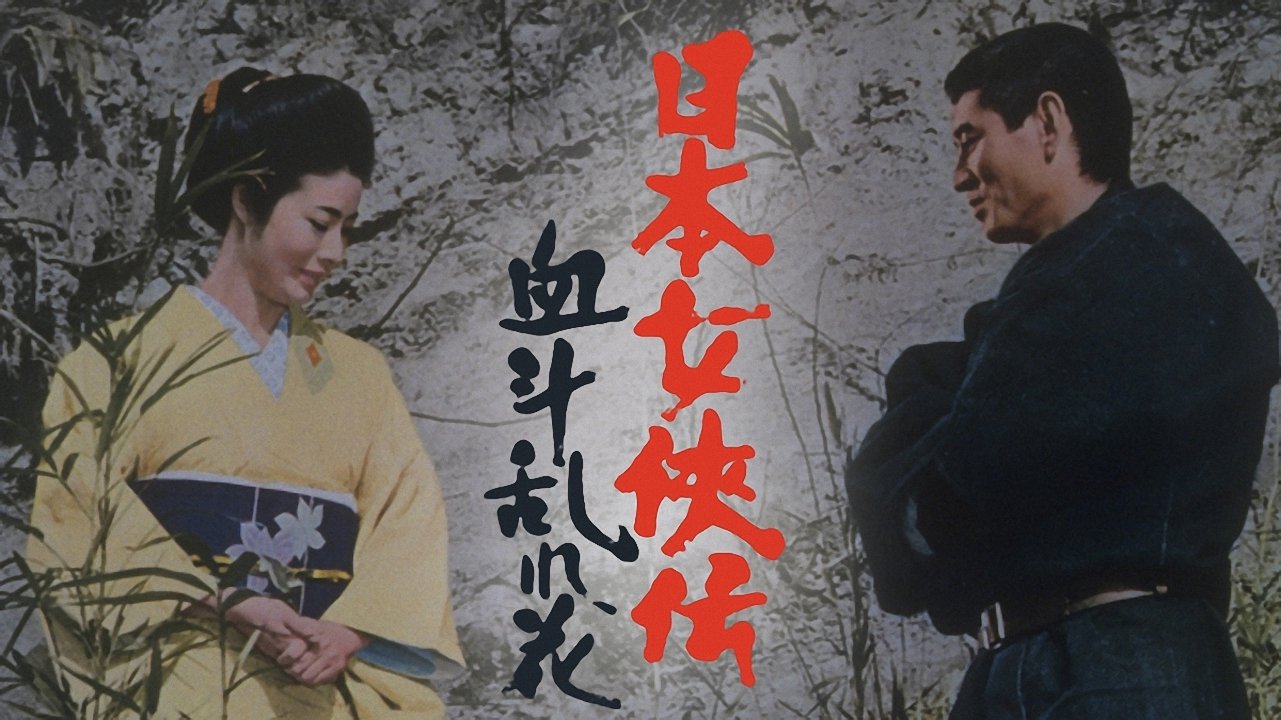
Bloodiest Flower (1971)
A dramatic captivating tale tells of widowed Tei (Junko Fuji), she has become a coalmine operator and is determined to be successful despite mining being a predominately male domain. Overcoming the natural hardships, a more serious threat to Tei and her mine, the menacing presence of rival mining gangs who sense her vulnerability... Nihon jokyo-den:ketto midarw-bana is an outstanding drama, highlighted by wonderful characterizations/performances. Yamashita's excellent direction maintains a rich emotional flow from the opening seconds to the last. Intense and bloody encounters punctuate throughout the engaging multi layered tale!
Director:
Kōsaku Yamashita
Writer:
Tatsuo Nogami
 |
Sumiko Fuji as |
 |
Ken Takakura as |
 |
Masahiko Tsugawa as |
 |
Michitarō Mizushima as |
 |
Minoru Ōki as |
 |
Bin Amatsu as |
 |
Rinichi Yamamoto as |
 |
Tatsuo Endō as |
 |
Kunio Kaga as |
 |
Kinji Nakamura as |
 |
Kinya Suzuki as |
 |
Yasumori Hikita as |
 |
Michimaro Otabe as |
 |
Asao Uchida as |
|
Kazutarō Kuni as |
|
Hiroko Sakaki as |
 |
Takashi Noguchi as |
|
Mineko Maruhira as |
|
Naotsugu Uzaki as |
 |
Masaharu Arikawa as |
| Directing | Kōsaku Yamashita | Director |
| Writing | Tatsuo Nogami | Screenplay |
| Sound | Takeo Watanabe | Original Music Composer |
| Camera | Nagaki Yamagishi | Director of Photography |
| Lighting | Hiroshi Watada | Lighting Technician |
| Art | Akira Ishihara | Production Design |
| Editing | Shintarō Miyamoto | Editor |