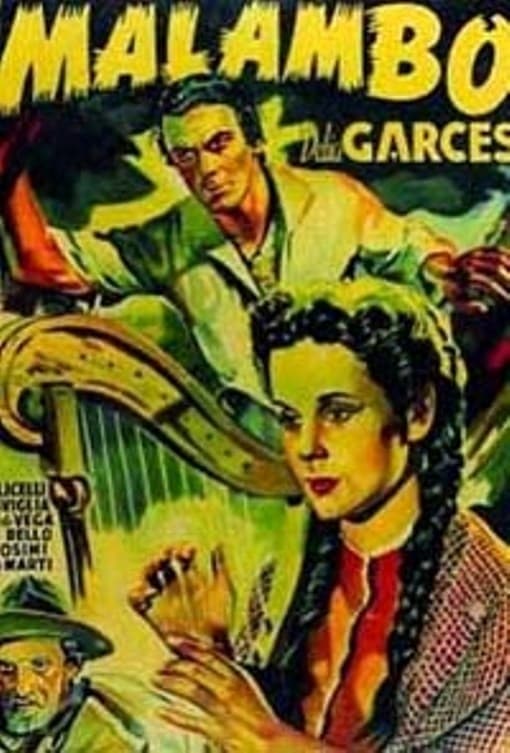
Malambo (1942)
Based on a quechua legend, Malambo tells the story of a woman who lost her husband and son because of the greedy patrón of an hacienda. She swore that she would never remove the cloth over her eyes until her dead were avenged by the deaths of the patrón and his daughter. Nature seems to be on her side, since a drought has afflicted the land. Her other son, Malambo, accepts the duty of revenge. Malambo is no normal human: he is the runa-uturungo, or Hombre Tigre, of Quechua lore, and he cannot be wounded by bullets. He leads the obreros to rise in revolt and defeats the patrón. However, instead of killing the patrón's daughter--the blind Urpila --he falls in love with her, thereby breaking his mother's heart.
Director: Alberto de Zavalía
 |
Delia Garcés as Urpila |
 |
Oscar Valicelli as Malambo |
 |
Orestes Caviglia as El emponchado |
 |
Milagros de la Vega as La madre |
 |
Alberto Bello as Soria |
 |
Nelo Cosimi as El patrón |
 |
Mariana Martí as La negrita |
 |
Tito Alonso as El aguaterito |
 |
Margarita Burke as Vieja Nro. 1 |
 |
María Goicochea as Vieja Nro. 2 |
|
Lucía Barausse as Vieja Nro. 3 |
 |
Claudio Martino as Balvidio |
|
Francisco Plastino as Un viejo |
|
Juan Farías as Viejito del fogón |
|
Héctor Leporace as Un muchacho |
|
Enrique Vico Carré as Taboada |
|
José Trecenza as |
|
Carlos A. Gordillo as |
|
Katia Baré as |
| Crew | Roque Funes | Cinematography |
| Crew | Antonio Merayo | Cinematography |
| Editing | Oscar Carchano | Editor |
| Art | Juan Manuel Concado | Art Direction |
| Directing | Alberto de Zavalía | Director |
| Production | Alberto de Zavalía | Producer |
| Writing | Hugo Mac Dougall | Writer |
| Sound | Alberto Ginastera | Music |