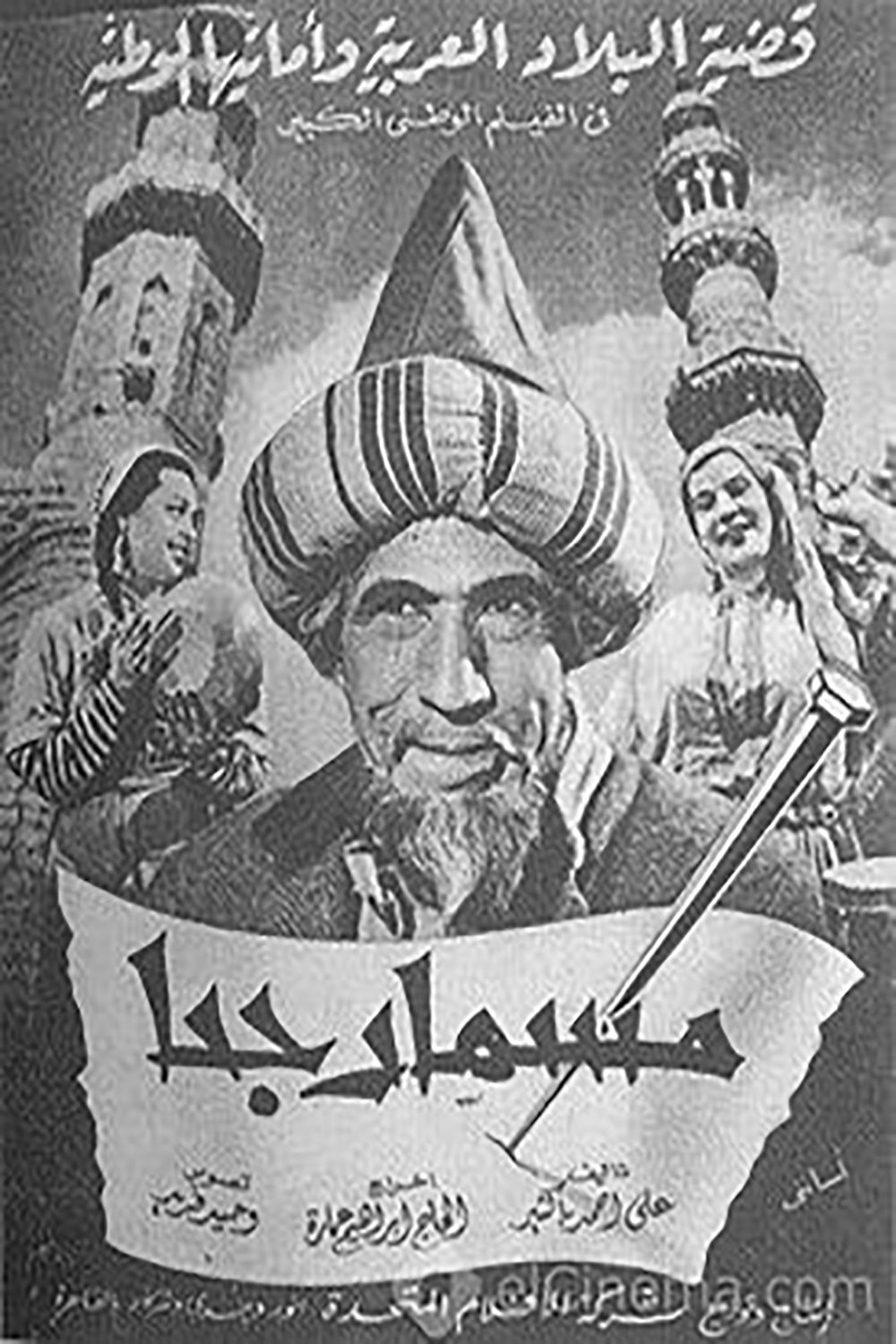
Mosmar Juha (1952)
During the Turkish occupation of the city of Kufa, there was an imam in the city called Juha, who called on the people to be guided and to always follow the straight path. Therefore, his method was to address the people, explaining the disadvantages of this occupation. Therefore, the Turkish ruler saw that Juha had become one of the rioters against them, so he ordered his dismissal from his work as an imam. Rather, he goes so far as to arrest and imprison him, and after a while orders his release, but he still continues his struggle against injustice and oppression.
Director:
Ibrahim Emara
Writers:
Abu Seoud El-Ibiary, Anwar Wagdi.
 |
Zaki Rostom as الحاكم المغتصب |
 |
Abbas Fares as جحا |
 |
Ismail Yaseen as غصن |
 |
Mary Moneib as أم الغصن |
 |
Kamal Al-Shennawi as حماد |
 |
Kitty as راقصة |
 |
Shahrazad as ميمونة |
 |
Reyaad ElQasabgy as حارس في أحد سجون الحاكم |
 |
Shafiq Nour ElDein as أبو سحتوت المرابي |
 |
Adly Kasseb as غانم / صاحب البيت اللي فيه المسمار |
 |
Mary Ezz El Din as غناء |
 |
Abdel Aziz Ahmad as أبو صفوان |
 |
Abdel Hamid Zaki as من جنود الحاكم |
 |
Abdel Moneim Ismail as حاتي |
 |
Ibrahim Emara as السلطان |
 |
Mahmoud Lotfy as محمود الغلبان |
 |
Abdelbadie El Araby as من جنود الحاكم |
 |
Abdel Hameed Badawy as |
 |
Samiha Mohamed as |
 |
Hassan Atla as |
| Directing | Ibrahim Emara | Director |
| Writing | Ali Ahmed Baktheir | Writer |
| Writing | Abu Seoud El-Ibiary | Screenplay |
| Writing | Anwar Wagdi | Screenplay |
| Art | Hasan El-Saifi | Assistant Decorator |
| Directing | Mounir Mourad | Assistant Director |