

12/26/1934
Shinjuku, Tokyo, Japan:
Sadao Iizuka (Īzuka Sadao, December 26, 1934 - March 24, 2023) was a prolific Japanese special effects artist and optical artist, most well-known for animating the rays and energy blasts of many Tokusatsu creations, like Godzilla's Atomic Breath and Ultraman's Spacium Beam. His first film was "Godzilla" (1954), where he worked under special effects art director, Akira Watanabe. He had similar roles in "Godzilla Raids Again" (1955), "Half Human" (1955), and "Rodan" (1956), before beginning his long career as an optical artist with "The Mysterians" (1957) under special effects director Eiji Tsuburaya. Throughout the 1960's, he would create optical effects and animation for some of Toho's greatest special effects films, like "King Kong vs. Godzilla" (1962) and "Ghidorah, the Three-Headed Monster" (1964), as well as the newly formed Tsuburaya Productions' Tokusatsu television series like "Ultra Q" (TV 1966-1967) and "Ultraman" (TV 1966-1967). In 1972, after nearly two decades of being a part of nearly every Tokusatsu film and television series from Toho and Tsuburaya, Iizuka and fellow optical artist Minoru Nakano would found their own company, Den Film Effects. The company would later work on numerous Tokusatsu film and television productions from Toho, Toei, Tsuburaya Productions, and Daiei. Iizuka would stay active in the field of special effects and optical effects, doing animation effects for some of Toho's "Heisei Era" films, like "Godzilla vs. Mechagodzilla II" (1993) and "Rebirth of Mothra" (1996). Some of the final films he worked on were "Godzilla: Final Wars" (2004) and "Shin Ultraman" (2022), being the 50th anniversary celebration and modern retelling of the original series, respectively, for two of Japan's most famous Tokusatsu franchises that he helped to create. Iizuka passed away at 88 years old on March 24, 2023, from aspiration pneumonia, after previously being hospitalized that January. Despite being uncredited for much of his work up until the early to mid 1970's, the influence his work has had on special effects science fiction and fantasy cinema is still felt today, with modern films like "Godzilla Minus One" (2023) and "Ultraman: Rising" (2024) depicting updated versions of his original special effects work to new generations of audiences.


|
THE ORIGIN OF ULTRAMAN (2026) as Self |
|
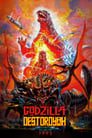
ゴジラvsデストロイア (1995) Visual Effects |

|
หนุมาน พบ 11 ยอดมนุษย์ (1984) Visual Effects |
|
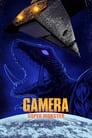
宇宙怪獣ガメラ (1980) Title Designer |
|
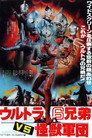
ウルトラ6兄弟VS怪獣軍団 (1979) Visual Effects |
|
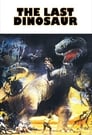
The Last Dinosaur (1977) Visual Effects |

|
Godzilla (1977) Visual Effects |
|
飛天超人 (1975) Visual Effects |
|
หนุมาน พบ 7 ยอดมนุษย์ (1974) Visual Effects |

|
ゴジラ・ミニラ・ガバラ オール怪獣大進撃 (1969) Visual Effects |
|
緯度0大作戦 (1969) Visual Effects |
|
怪獣島の決戦 ゴジラの息子 (1967) Visual Effects |
|
|
怪獣島の決戦 ゴジラの息子 (1967) Special Effects |
|
|
怪獣島の決戦 ゴジラの息子 (1967) Visual Effects Camera |
|
キングコングの逆襲 (1967) Visual Effects |

|
ゴジラ・エビラ・モスラ 南海の大決闘 (1966) Visual Effects |
|
フランケンシュタインの怪獣 サンダ対ガイラ (1966) Special Effects |
|
|
フランケンシュタインの怪獣 サンダ対ガイラ (1966) Visual Effects |

|
怪獣大戦争 (1965) Visual Effects |
|
三大怪獣 地球最大の決戦 (1964) Visual Effects |

|
宇宙大怪獣ドゴラ (1964) Visual Effects |

|
モスラ対ゴジラ (1964) Visual Effects |
|
|
モスラ対ゴジラ (1964) Visual Effects Camera |

|
マタンゴ (1963) Visual Effects |
|
King Kong vs. Godzilla (1963) Visual Effects |
|
キングコング対ゴジラ (1962) Visual Effects |

|
世界大戦争 (1961) Visual Effects |

|
モスラ (1961) Visual Effects |
|
Gigantis, the Fire Monster (1959) Visual Effects |

|
獣人雪男 (1957) Special Effects |

|
Godzilla, le Monstre de L'Océan Pacifique (1957) Visual Effects |

|
空の大怪獸 ラドン (1956) Visual Effects |

|
白夫人の妖恋 (1956) Visual Effects |
|
Godzilla, King of the Monsters! (1956) Visual Effects |
|
獣人雪男 (1955) Special Effects |
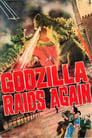
|
ゴジラの逆襲 (1955) Visual Effects |

|
ゴジラ (1954) Visual Effects |