Deprecated: Function get_magic_quotes_gpc() is deprecated in /home3/dodecasaurus/itopmovies.com/Library/NG/Autoloader.php on line 113

Notice: fwrite(): write of 8192 bytes failed with errno=122 Disk quota exceeded in /home3/dodecasaurus/itopmovies.com/Application/Model/Filecache.php on line 75
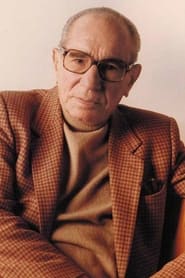
Pierre Chenal


Pierre Chenal

Birthday:

12/05/1904

Place of birth:

Bruxelles, Belgique:

Biography:

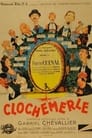
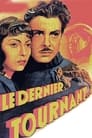
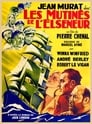
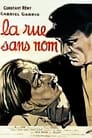
Philippe Cohen, known as Pierre Chenal, is a French director, born December 5, 1904 in Brussels and died December 23, 1990 in La Garenne-Colombes. Chenal occupies an uncomfortable place in the history of French cinema: relatively unknown, he is cataloged as a filmmaker who left only a light body of work. His detailed filmography, however, tends to show the opposite. Made in the 1930s, his first short films were documentaries where the filmmaker used social realism. The Little Trades of Paris (1932) or A French City of Cinema had a didactic ambition which ranked him among the innovators at the time. Throughout his work, Pierre Chenal will maintain this taste for atmospheres tinged with truth where the social is shown. Hence his very marked penchant for adaptations of literary works by his contemporaries: he borrowed from Marcel Aymé the title of one of his first feature films, La rue sans nom (1933); summons Pirandello and The Man from Nowhere (1937); depicts The Mutineers of Elsinore by Jack London; and transforms James Cain's novel The Postman Always Rings Twice to give The Last Turn. Pierre Chenal loves actors and casts the biggest ones. Louis Jouvet, Robert Le Vigan, Michel Simon, Pierre Blanchar, Viviane Romance and Albert Préjean praise his talent. In 1940, the filmmaker's career took a new turn when he retreated, during the war, to Argentina and Chile. He made a few minor films there, then returned to France with comic intentions expressed in Clochemerle (1947). In 1948, Chenal returned to Argentina and adapted Sangre Negra by the American noir novelist Richard Wright. Then, he developed a passion for thrillers and experimented with the genre on several occasions. But Raid on the City (1958), The Beast on the Prowl (1959) and The Assassin Knows the Music (1963) are not considered to be his best films.


Credits

Paris Cinéma (1929)
as Self
Le hasard mène le Jeu (1985)
Director
Le hasard mène le Jeu (1985)
Writer
Les belles au bois dormantes (1970)
Director
L'assassin connaît la musique (1963)
Director
L'assassin connaît la musique (1963)
Writer
L’ultimo zar (1960)
Director
L’ultimo zar (1960)
Writer
La Bête à l'affût (1959)
Director
Les Jeux dangereux (1958)
Director
Les Jeux dangereux (1958)
Screenplay
Rafles sur la ville (1958)
Director
Rafles sur la ville (1958)
Screenplay
Section des disparus (1956)
Director
Section des disparus (1956)
Screenplay
El ídolo (1952)
Director
El ídolo (1952)
Screenplay
Native Son (1951)
Director
Native Son (1951)
Screenplay
Clochemerle (1948)
Director
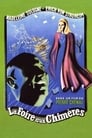
La Foire aux chimères (1946)
Director
El viaje sin regreso (1946)
Director
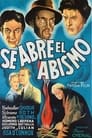
Se abre el abismo (1945)
Director
El muerto falta a la cita (1944)
Director
El muerto falta a la cita (1944)
Writer
Todo un hombre (1943)
Director
Le Dernier Tournant (1939)
Director
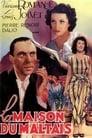
La Maison du Maltais (1938)
Director
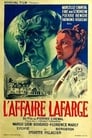
L'Affaire Lafarge (1938)
Director
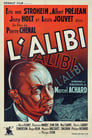
L'Alibi (1937)
Director
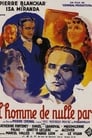
L'Homme de nulle part (1937)
Director
L'Homme de nulle part (1937)
Screenplay
Les mutinés de l'Elseneur (1936)
Director
Les mutinés de l'Elseneur (1936)
Screenplay
Crime et Châtiment (1935)
Director
Crime et Châtiment (1935)
Writer
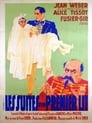
Les suites d'un premier lit (1935)
Director
La Rue sans nom (1934)
Director
La Rue sans nom (1934)
Writer
Le martyre de l'obèse (1933)
Director
Petits métiers de Paris (1932)
Director
Petits métiers de Paris (1932)
Cinematography
Petits métiers de Paris (1932)
Editor
Bâtir (1931)
Director
Bâtir (1931)
Writer
Bâtir (1931)
Producer
L'Architecture d'Aujourd'hui (1930)
Director
L'Architecture d'Aujourd'hui (1930)
Writer
L'Architecture d'Aujourd'hui (1930)
Cinematography
Paris Cinéma (1929)
Director
Paris Cinéma (1929)
Editor